

close
close
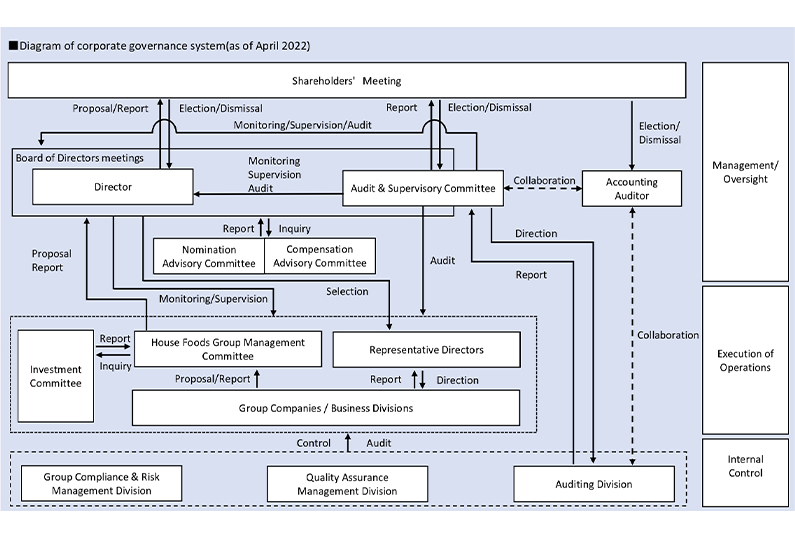
The Group has established a corporate governance system to realize its corporate philosophy and achieve its management targets. It implements initiatives intended to lead to improvement in corporate value and sustainable development from a perspective that considers frameworks for the accurate and effective operation of organizations as internal control systems.
The Company made Ichibanya Co., Ltd. a consolidated subsidiary in December 2015. Ichibanya Co., Ltd. is a listed company, and the Company undertakes the operation of Ichibanya’s internal control system with due respect.
As a company with an Audit & Supervisory Committee, the execution of duties by Directors and the
legality and appropriateness of resolutions made by the Board of Directors are monitored, supervised, and audited by
the Audit & Supervisory Committee, and five Directors (including four Outside Directors) who are members of the
Committee.
The Board of Directors consists of 12 Directors (including four Outside Directors), and it makes decisions regarding
the execution of important operations of the Group and monitors and supervises the execution of operations by other
Directors and Group companies.
The Group has also established the Nomination Advisory Committee and the Compensation Advisory Committee as
voluntary advisory bodies to the Board of Directors, each with the majority of members being Independent Outside
Directors and each chaired by an Independent Outside Director, to ensure objectivity and transparency in the
processes for making decisions regarding compensation and the election or dismissal of Directors.
The Audit & Supervisory Committee collaborates closely with and directs the Auditing Division, which is
responsible for conducting audits of operations and implementing internal controls related to financial reporting,
and the Audit & Supervisory Committee confirms the status of conducting audits and evaluating internal control
systems. The committee exchanges opinions with the division regularly, conducts inspections together with it, and
issues specific instructions. It also audits the Directors’ execution of their duties in an organized way by
partnering with the Accounting Auditor and, when necessary, attorneys.
The accounting audit is performed by Deloitte Touche Tohmatsu LLC. We have an audit agreement with this firm to
perform audits under the Companies Act and the Financial Instruments and Exchange Act.
| Chair of the Board of Directors | President Hiroshi Urakami | |
|---|---|---|
| Directors who are not Audit & Supervisory Committee Members | Directors who are Audit & Supervisory Committee Members | |
| Standing Audit & Supervisory Board Member | Not more than 10 | Not more than 8 |
| Number of Directors | 7 | 5 |
| Term of Office of Director | 1 year | 2 years |
| Number of Outside Directors(Number of Independent Directors) | - | 4(4) |
| Number of female Directors | - | 2 |
| Ratio of female Directors | 16.7% | |
| Purpose | Ensure objectivity and transparency in decisions concerning the compensation system and the amounts of compensation, etc. for Directors |
|---|---|
| Chairperson | Independent Outside Director |
| Number of Committee Members | 6 Directors (of whom four are Outside Directors) |
| Held | Three times a year in principle |
| Purpose | Ensure objectivity and transparency in the decision process, such as the election and dismissal of Directors |
|---|---|
| Chairperson | Independent Outside Director |
| Number of Committee Members | 6 Directors (of whom four are Outside Directors) |
| Held | Twice a year in principle |
For new Directors, the number of meetings and attendance rate after being appointed are listed.
| Name | Board of Directors meetings (14 meetings) | Audit & Supervisory Committee (12 meetings) | Compensation Advisory Committee (3 meetings) | Nomination Advisory Committee (2 meetings) |
|---|---|---|---|---|
| Hiroshi Urakami | 100% (14/14 meetings) | - | 100% (3/3 meetings) | 100% (2/2 meetings) |
| Yoshiyuki Osawa | 100% (14/14 meetings) | - | 100% (3/3 meetings) | 100% (2/2 meetings) |
| Kotaro Kawasaki | 100% (14/14 meetings) | - | - | - |
| Yoshiyuki Miyaoku | 100% (14/14 meetings) | - | - | - |
| Tatsumi Yamaguchi | 100% (14/14 meetings) | - | - | - |
| Atsushi Sakuma | 100% (14/14 meetings) | - | - | - |
| Yuichi Okamoto | 100% (10/10 meetings) | - | - | - |
| Tsuneo Kubota | 100% (14/14 meetings) | 100% (12/12 meetings) | - | - |
| Atsuko Okajima | 100% (14/14 meetings) | 100% (12/12 meetings) | 100% (3/3 meetings) | 100% (2/2 meetings) |
| Fukuichi Sekine | 100% (14/14 meetings) | 100% (12/12 meetings) | 100% (3/3 meetings) | 100% (2/2 meetings) |
| Yasuyuki Kawasaki | 100% (14/14 meetings) | 100% (12/12 meetings) | 100% (3/3 meetings) | 100% (2/2 meetings) |
| Miwa Yamada | 100% (10/10 meetings) | 100% (9/9 meetings) | 100% (2/2 meetings) | 100% (2/2 meetings) |
With regard to the election of management executives and the nomination of candidates for Directors, suitable personnel according to the election criteria shall, upon deliberations by the Nomination Advisory Committee, be resolved as candidates by the Board of Directors, and then brought to the General Meeting of Shareholders for discussions.
| Directors (excluding Directors who are Audit & Supervisory Committee Members) |
・Persons who have courage to stay committed to the Group’s philosophy and mission statement ・ Persons who have the knowledge, experience and ability to engage in management ・ Persons who aim to enhance the corporate value, and who have the driving force to achieve performance targets ・ Persons with an excellent human nature appropriate for a Director of the Company |
|---|---|
| Directors who are Audit & Supervisory Committee Members | ・ Persons who possess the ability to carry out an audit based on extensive experience and insight ・ Persons with an excellent human nature appropriate for an Audit & Supervisory Committee Member of the Company |
Personnel who are to serve as Directors in the future receive practical OJT mainly through gaining experience as directors of business companies as well as OFF-JT mainly through executive development programs and internal training, as part of the Company’s efforts to nurture successors. If the Board of Directors determines, following deliberation by the Nomination Advisory Committee, that a management executive is not consistent with the election criteria, dismissal will be resolved by the Board of Directors and presented to the Shareholders’ Meeting for discussion.
The skills of the Board of Directors are identified as skills that should provide the functions necessary for corporate management as the House Foods Group. In addition, the Board of Directors is to be composed of persons of diverse expertise and various experiences, regardless of age or gender, and is to be of a size that ensures flexible decision-making and mutual supervision.
| Name | Position | Expertise and experience required for a Director in supervision and execution | ||||||||||||||
|---|---|---|---|---|---|---|---|---|---|---|---|---|---|---|---|---|
| Corporate Management | Personnel affairs and Diversity | Finance and Accounting | Legal affairs, Compliance and Risk | Public relations, investor relations | Sustainability | R&D and intellectual property | Global Business | Digital Technology and DX | Quality Assurance | Production and Procurement | Sales, Marketing and Advertisement | Management of other companies | ||||
| 1 | Hiroshi Urakami |
|
Representative Director & President | ● | ● | ● | ● | |||||||||
| 2 | Yoshiyuki Osawa |
|
Representative Director & Senior Managing Director | ● | ● | ● | ● | ● | ● | |||||||
| 3 | Kotaro Kawasaki |
|
Senior Managing Director | ● | ● | ● | ● | ● | ||||||||
| 4 | Yoshiyuki Miyaoku |
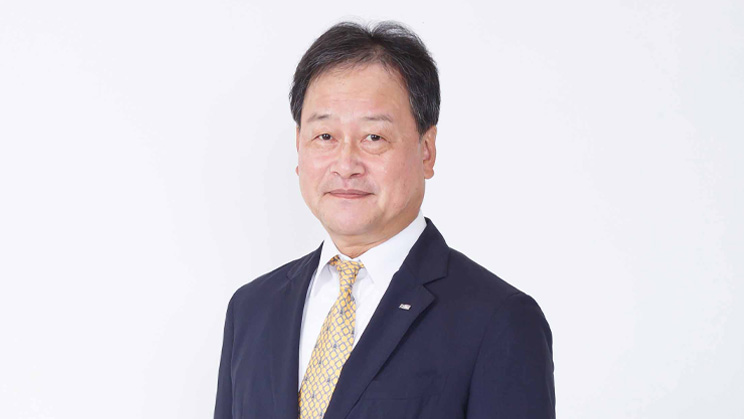
|
Director | ● | ● | ● | ● | ● | ● | ● | ● | |||||
| 5 | Tatsumi Yamaguchi |
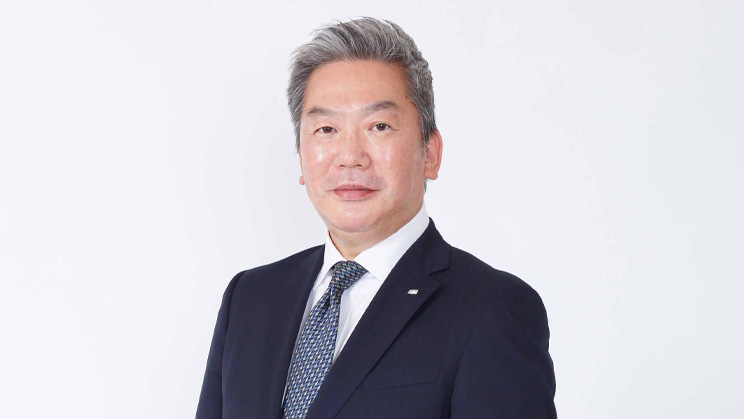
|
Director | ● | ● | ● | ● | ● | ● | |||||||
| 6 | Atsushi Sakuma |
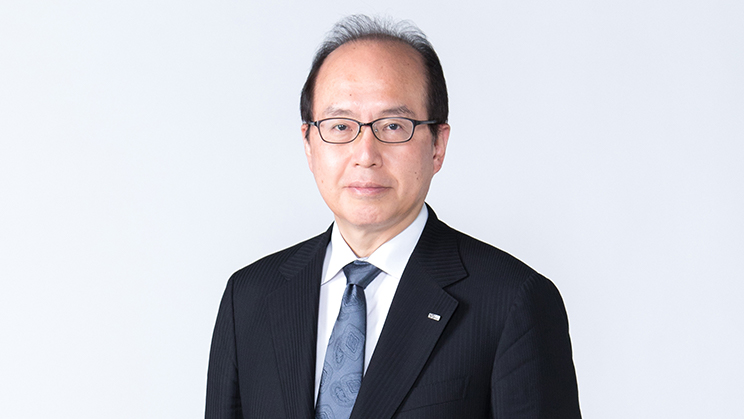
|
Director | ● | ● | ● | ● | ● | ● | ● | ||||||
| 7 | Yuichi Okamoto |
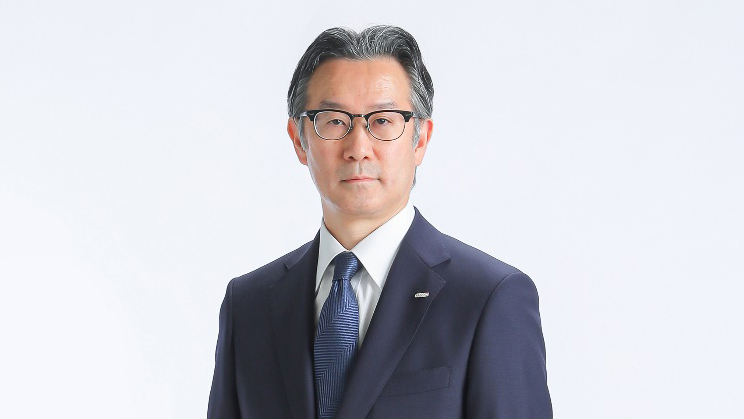
|
Director | ● | ● | ● | ||||||||||
| 8 | Tsuneo Kubota |
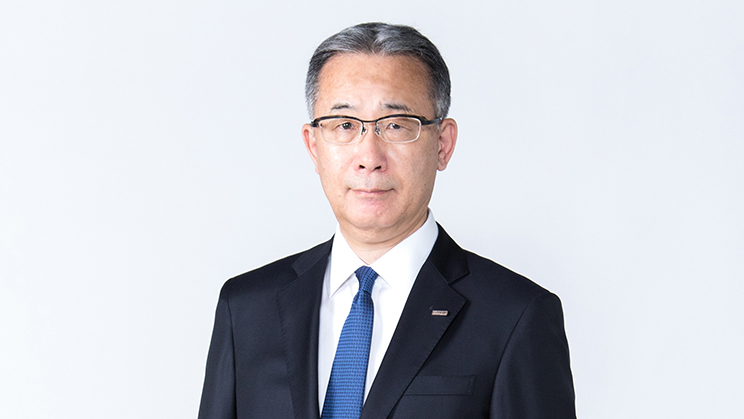
|
Director (Audit & Supervisory Committee member; full time) | ● | ● | |||||||||||
| 9 | Atsuko Okajima |
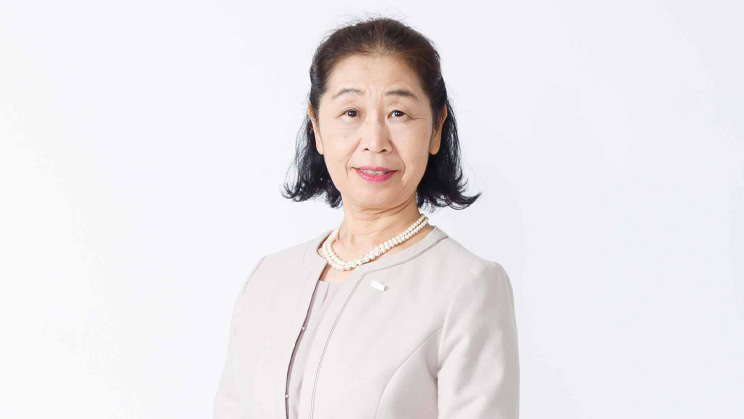
|
Director (Audit & Supervisory Committee member; outside) | ● | ● | |||||||||||
| 10 | Fukuichi Sekine |
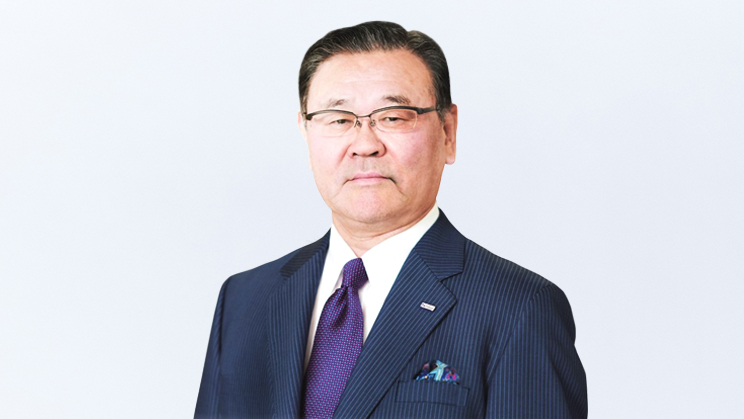
|
Director (Audit & Supervisory Committee member; outside) | ● | ● | ● | ● | ● | ||||||||
| 11 | Yasuyuki Kawasaki |
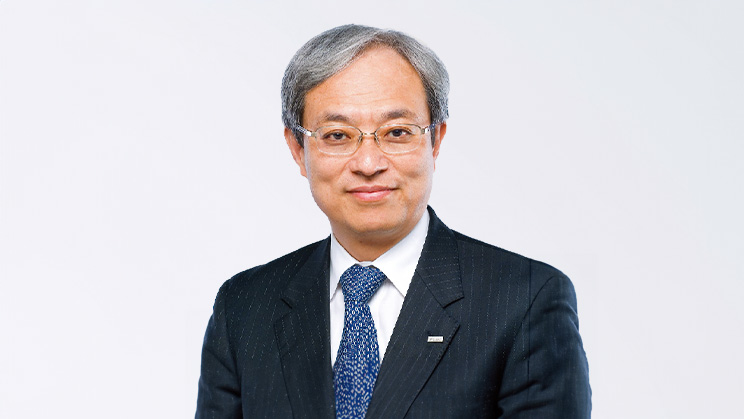
|
Director (Audit & Supervisory Committee member; outside) | ● | ● | ● | ● | ● | ● | |||||||
| 12 | Miwa Yamada |

|
Director (Audit & Supervisory Committee member; outside) | ● | ● | ● | ● | |||||||||
As our basic policy, the compensation system and the amounts of compensation, etc. for Directors (excluding Directors who are Audit & Supervisory Committee Members) are based on the following points: “it gives motivation for the enhancement of corporate value and sustainable growth, and for achieving the Medium-Term Business Plan in order to realize the Group’s Philosophy,” “it is commensurate with the role and responsibilities of the position held, in light of the size of the company and its social responsibilities,” and “objectivity and transparency are ensured in the decision process of compensation.” They are determined by the Board of Directors after deliberations of the Compensation Advisory Committee.
The compensation system and the amounts of compensation, etc. for the Directors who are Audit & Supervisory Committee Members are deliberated by the Compensation Advisory Committee at the request of the Audit & Supervisory Committee, and after the deliberation results are reported to the Audit & Supervisory Committee, determined by consultation among the Directors who are Audit & Supervisory Committee Members.
| Compensation type | Evaluation indicators, method of payment, etc. | Percentage of compensation | Performance-linked | ||
|---|---|---|---|---|---|
| Fixed compensation | Add compensation according to the role to the compensation level determined by position, and pay as monthly compensation | 60% | |||
| Short-term incentives | Single-year performance-linked compensation | Evaluation of company performance | Based on the indicator determined by the Board of Directors, evaluate the degree of achievement of the relevant indicator for the Group or the operating company each Director is responsible for on a single fiscal-year basis, and pay as bonuses according to the results of the evaluation | 25% | ○ |
| Evaluation of individual performance | Define the degree of achievement of targets set by each Director as an evaluation indicator, and pay as bonuses according to the degree of achievement | ||||
| Medium- to long-term incentives | Advance-issue-type restricted stock compensation | Pay for the purpose of motivation for the continuous improvement of corporate value and further encouraging value sharing with shareholders of the Company | 10% | ||
| Performance-linked, restricted stock compensation | In addition to the above, pay for the purpose of better incentivizing to Executive Directors to achieve the medium-term business plans (adopt non-financial indicators prescribed in medium-term business plans as evaluation indicators for the stock compensation) |
5% | ○ | ||
Compensation for Directors who are Audit & Supervisory Committee Members consists of only fixed compensation.
<Outline of the linkage with performance for Directors (excluding Directors who are Audit & Supervisory Committee Members)>
| Executive category | Total compensation, etc. (millions of yen) |
Compensation, etc., by type (millions of yen) | Number of eligible executives | |||
|---|---|---|---|---|---|---|
| Monthly compensation (fixed compensation) |
Performance-linked compensation for single fiscal year |
Advance-issue-type restricted stock compensation | Performance-linked restricted stock compensation | |||
| Directors (excluding Audit & Supervisory Committee Members and Outside Directors) | 281 | 166 | 67 | 31 | 16 | 7 |
| Directors (Audit & Supervisory Committee Members) (excluding Outside Directors) | 24 | 24 | - | - | - | 1 |
| Outside Executives | 73 | 73 | - | - | - | 5 |
Total amounts for compensation for Directors and other items do not include the employee portion of salaries for Directors who serve concurrently as employees.
| category | Previous consolidated fiscal year | Consolidated fiscal year under review | ||
|---|---|---|---|---|
| Fees for Audit Certification Services (millions of yen) |
Fees for Other Services (millions of yen) |
Fees for Audit Certification Services (millions of yen) |
Fees for Other Services (millions of yen) |
|
| Reporting Company | 70 | 5 | 68 | 14 |
| Consolidated Subsidiary | 80 | - | 83 | - |
| Total | 150 | 5 | 151 | 14 |
Previous consolidated fiscal year: Not any applicable items about fees for other services.
Consolidated fiscal year under review: Fees for other services account for advisory services regarding internal control.
As the parent company, House Foods Group Inc. exercises a certainlevel of supervisory functions over Ichibanya Co., Ltd. For example, seconding a Director to the subsidiary as a non-standing Director, having the subsidiary regularly report on its business performance at its Board of Directors’ meetings, and resolving at its Management Committee what proposals should be included in the agenda of the General Meeting of Shareholders of the subsidiary. On the other hand, the Group respects decisions on the execution of daily operations made by the subsidiary’s management, which excels at advancing the restaurant business. Furthermore, in order to secure the independence of the Ichibanya Board of Directors, the structure of this Board was changed starting in May 2024 to ensure that half of the eight directors of Ichibanya be outside directors who are also members of the Audit & Supervisory Committee, while decisions regarding transactions with the Group of high importance would be made following deliberation and investigation by a special committee comprised of the director in charge of corporate planning along with four independent, outside directors after seeking the opinion of the Audit & Supervisory Committee, ensuring a structure that prevents the interests of shareholders not of the Company from being unduly harmed.
The Group and the subsidiary, whose business models are different, work together to strengthen collaboration and promote cooperation themes while respecting each other’s uniqueness, thereby enabling all three parties (including franchise owners who are engaged in the management of stores) to enjoy the benefits together. In this way, the Group believes it is also contributing benefits to shareholders of the subsidiary who do not hold shares in the Company. The Group’s policy is to keep both itself and the subsidiary listed while ensuring the effectiveness of the corporate governance system of the subsidiary.